
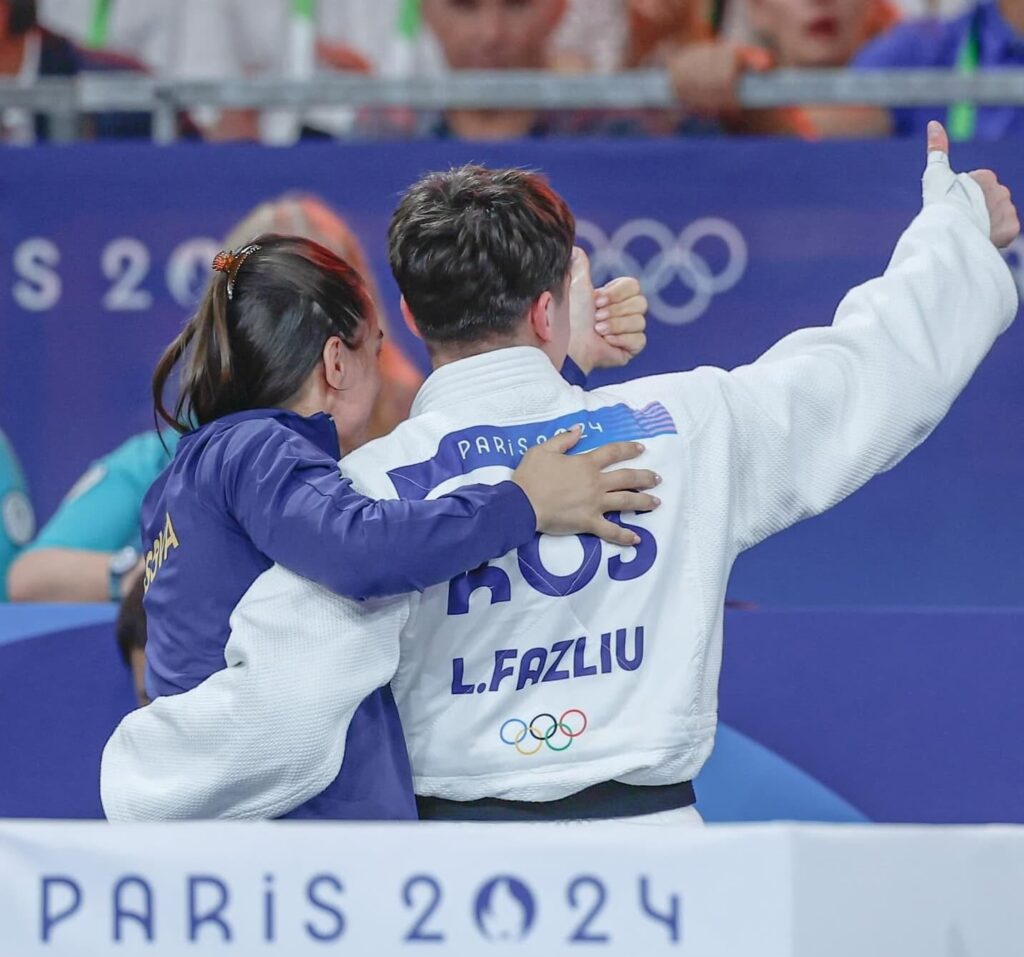
Analysis of age peak of judo Olympic medalists from 2004 to 2024
Luiz Francisco CAMILO JUNIOR1,2, Antonio Carlos TAVARES JUNIOR3,4*, Miller Pereira GUIMARÃES5,6 , Paulo Henrique Silva MARQUES DE AZEVEDO5,6 , Alexandre Janotta DRIGO1. Analysis of age peak of judo Olympic medalists from 2004 to 2024. Rev.ArtesMarcialesAsiát.,21(2),257-269 ~2026

ABSTRACT
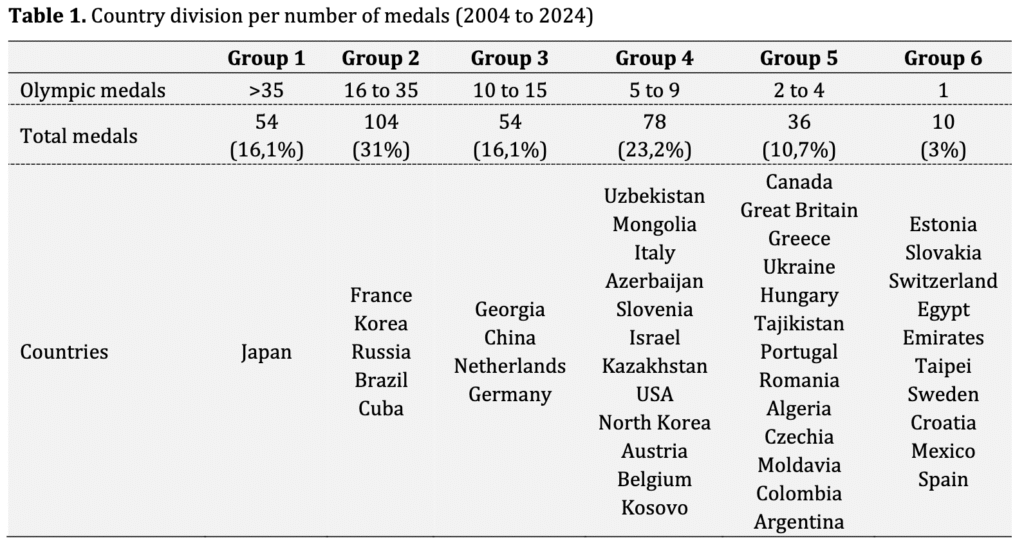
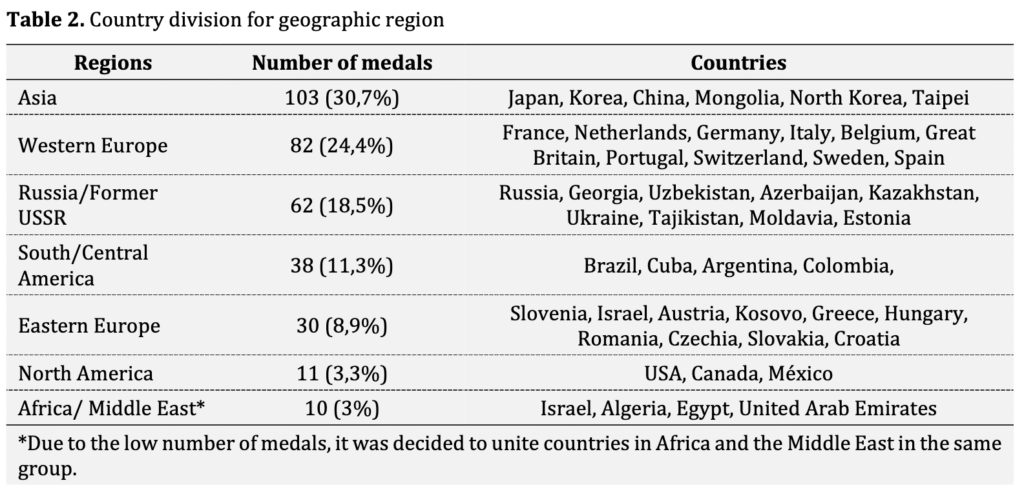
The aim of this study was to verify whether there is similarity in medalist judo athletes’ age peak, at the Olympic Games from 2004 to 2024, between the different male and female weight categories and according to the countries’ competitive level and their geographic locations. We collected data on the medalists’ ages, related to male (N=168) and female (N=168) judo categories, of Athens 2004, Beijing 2008, London 2012, Rio 2016, Tokyo 2020 and Paris 2024 Olympic Games. They were grouped per country and separated per sex, forming three analysis categories: a) weight category; b) groups, according to the number of Olympic medals of each nation, and c) world geographic region. A Bayesian ANOVA was performed for each of the categories of analysis, with order of comparison from the null model, to determine probability of similarity (BF01). One verified that the probability of medalist judo athletes in 2004 (26.2 ± 3.3), 2008 (25.6 ± 3.9), 2012 (26.2 ± 3.6), 2016 (26.1 ± 2.6), 2020 (26.1 ± 2.8) and 2024 (26.7 ± 3.2) Olympic Games to present age similarity varies between 77% and 84%. About the different weight categories, it is possible to say that Olympic medalists’ age are one to three times more likely to be similar than different and the probability of similarity of Olympic medalists’ age is not influenced of competitive relevance or geographic region. It can be concluded no differences were found in relation to the medalist judo athletes’ age, regardless of sex, weight categories, country competitive tradition, or the geographic region.
Keywords: Martial arts;combat sports; judo; age peak; Olympic Games; sports performance; Bayesian analysis
Download the full article HERE.
Check out HERE our previous article titled: “Previous results and age of medalists at Tokyo 2021” by Marcus Agostinho.