
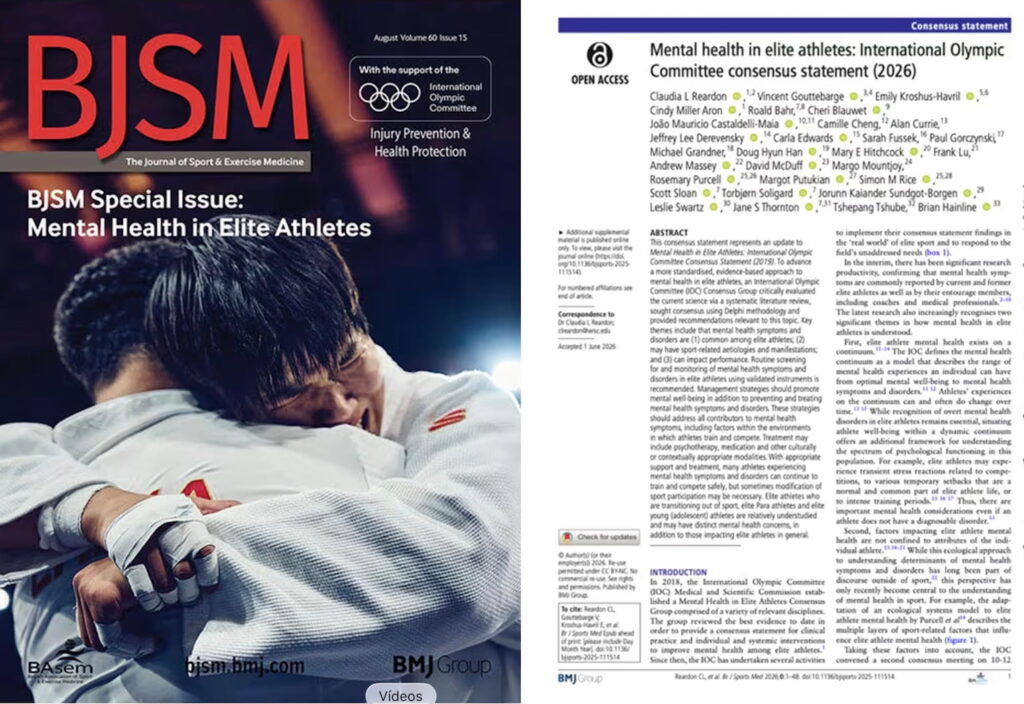
Mental health in elite athletes: International Olympic Committee consensus statement (2026)
Supporting mental health in elite sport is a shared responsibility that extends far beyond the individual athlete, according to a new International Olympic Committee (IOC) international consensus statement published in a special edition of the British Journal of Sports Medicine.
Developed by 31 international experts following an IOC-convened consensus meeting in Lausanne in June 2025, the statement calls for coordinated action across the sporting ecosystem, from sporting organisations and leaders to coaches, support staff, healthcare professionals and athletes themselves.
Rather than focusing solely on diagnosis and treatment, the statement advocates a broader approach to promoting wellbeing, including regular monitoring to identify concerns early, reducing barriers to seeking help and supporting athletes throughout their sporting careers.
While elite athletes experience mental health symptoms and disorders at rates similar to, and in some cases higher than, the general population, they also face challenges that are unique to the elite sport environment. Factors such as training environments, injury, major life transitions, performance pressures, social media exposure and organisational culture can all affect athlete mental health and wellbeing.
Read more about this at IOC website HERE.
Reardon CL, Gouttebarge V, Kroshus-Havril E, et al. Mental health in elite athletes: International OlympicCommittee consensus statement (2026). Br J Sports Med. 2026.

ABSTRACT
his consensus statement represents an update to Mental Health in Elite Athletes: International Olympic Committee Consensus Statement (2019). To advance a more standardised, evidence-based approach to
mental health in elite athletes, an International Olympic Committee (IOC) Consensus Group critically evaluated the current science via a systematic literature review, sought consensus using Delphi methodology and provided recommendations relevant to this topic. Key themes include that mental health symptoms and
disorders are (1) common among elite athletes; (2) may have sport-related aetiologies and manifestations;
and (3) can impact performance. Routine screening for and monitoring of mental health symptoms and disorders in elite athletes using validated instruments is recommended. Management strategies should promote mental well-being in addition to preventing and treating mental health symptoms and disorders. These strategies should address all contributors to mental health symptoms, including factors within the environments in which athletes train and compete. Treatment may
include psychotherapy, medication and other culturally or contextually appropriate modalities. With appropriate support and treatment, many athletes experiencing mental health symptoms and disorders can continue to train and compete safely, but sometimes modification of sport participation may be necessary. Elite athletes who are transitioning out of sport, elite Para athletes and elite young (adolescent) athletes are relatively understudied and may have distinct mental health concerns, in addition to those impacting elite athletes in general.
Download the full article HERE.