
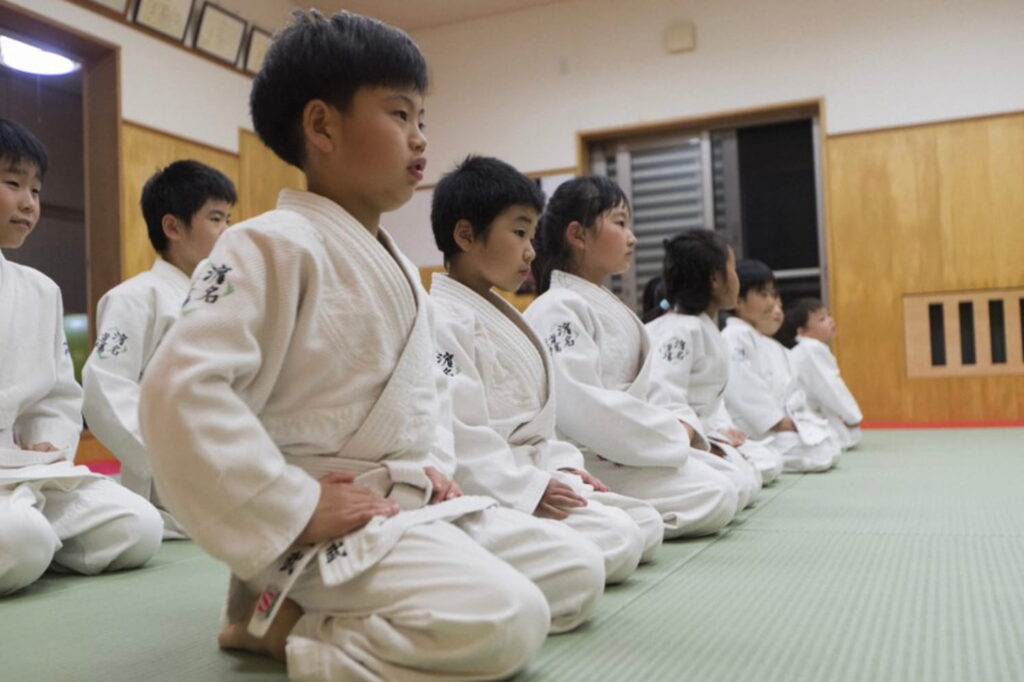
Instructor-reported support needs and neurodevelopmental disorder diagnoses among children in Japanese judo
Ozaki R, Hosokawa K, Nishimura K. Instructor-reported support needs and neurodevelopmental disorder diagnoses among children in Japanese judo: a cross-sectional survey across all Japanese prefectures. Front Sports Act Living. 2026 Jul 27;8:1912597.

ABSTRACT
Background: Community sport clubs serve as important participation environments for children with neurodevelopmental disorders (NDDs). Yet, nationwide data on their enrollment in specific sports remain scarce. This study estimated the proportions of participants identified by instructors as requiring additional support and instructor-known NDD diagnoses in judo clubs and programs.
Methods: A cross-sectional survey covering all 47 Japanese prefectures was conducted in 2025. Instructors of 1,104 clubs and programs reported the total number of participants, the number requiring additional support, and instructor-known diagnoses of attention-deficit/hyperactivity disorder (ADHD), autism spectrum disorder (ASD), specific learning disorder (SLD), and developmental coordination disorder (DCD). Proportions and 95% confidence intervals (Wilson score method) were estimated by age category. A Cochran-Armitage trend test was used to assess linear trends across ordered age groups.
Results: Overall, 1,079 of 15,360 participants (7.02%, 95% CI 6.63-7.44) were identified as requiring additional support. Proportions generally decreased with advancing age category: preschool 12.13% (10.29-14.25), elementary school 7.24% (6.66-7.88), junior high school 7.59% (6.84-8.41), high school 5.21% (4.34-6.25), and university 0.79% (0.38-1.62) (Cochran-Armitage trend test: Z = -8.64, p < 0.001). Instructor-known diagnoses were reported for 1.57% (ADHD), 0.68% (ASD), 0.70% (SLD), and 0.09% (DCD) of participants. Diagnostic categories were not mutually exclusive. The summed proportion of instructor-known diagnostic reports (3.04%) therefore represents an upper bound on the proportion of participants with any known diagnosis. Even this upper bound remained well below the instructor-identified support-need proportion (7.02%). This gap indicates that support needs in community judo extend beyond disclosed diagnoses.
Conclusions: Participants requiring additional support are present in Japanese judo clubs and programs across prefectures. Crucially, diagnosis-independent, and age- and setting-sensitive accommodation in community sport is important. Finally, the 7.02% figure should be interpreted as a context-specific indicator of the support demand instructors perceive rather than as a clinical prevalence estimate.
Keywords: adapted sports; community sport; inclusive practice; instructor report; judo; neurodevelopmental disorders; youth participation.
Donwload the full article HERE.