
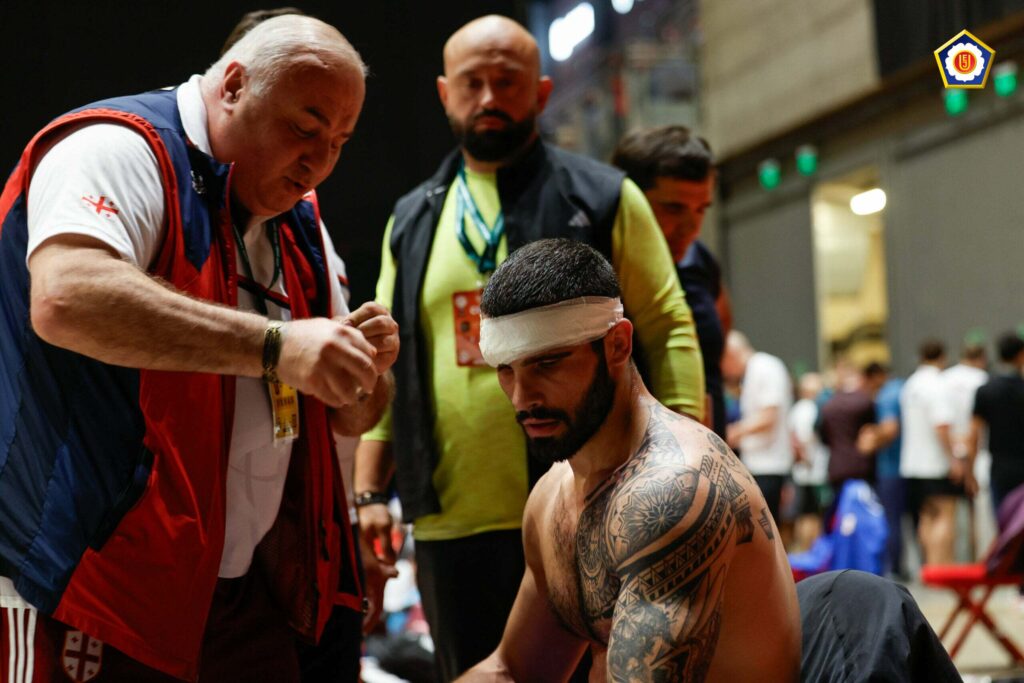
Optimizing performance and injury prevention in combat sports and martial arts
Ojeda-Aravena A, Kons RL, Báez-San Martín E, Dopico-Calvo X. Editorial: Optimizing performance and injury prevention in combat sports and martial arts: methodologies for control and monitoring. Front Sports Act Living. 2026 Mar 27;8:1824699.

The study of martial arts and combat sports has experienced sustained growth and progressive consolidation within the international scientific community dedicated to sport and exercise sciences (1, 2). This development has been driven both by the expansion of these disciplines within the global competitive landscape and by a substantial increase in scientific research examining their physiological, biomechanical, psychological, and technical–tactical dimensions. From a historical perspective, several combat disciplines have been included in the Olympic programme since the earliest editions of the modern Olympic Games. Fencing was part of the Olympic programme from the beginning of the modern Olympic movement, followed by wrestling and boxing, while later decades saw the inclusion of judo and taekwondo. More recently, karate was incorporated as an invited sport in the Tokyo Olympic Games. This competitive expansion has been accompanied by a steady increase in scientific publications indexed in major international databases such as Web of Science, reflecting the consolidation of this domain as a distinct field of research within sport sciences (2).
Continue reading and download the full article HERE.