
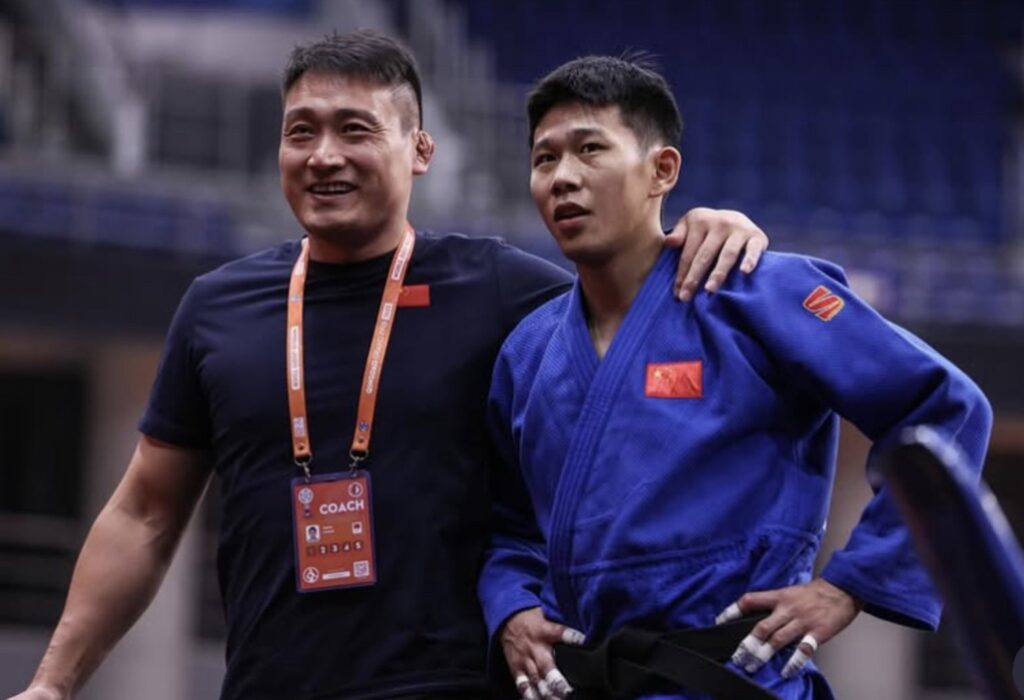
Hey athlete, you need to cut weight!
Zhong Y, Weldon A, Luo Y, Kirk C, Li P, Zhang Z, Chen C, Xu K, Yin M, Tao M, Ren Z, Wu Y, Liu S, I Gee T, Lakicevic N, Langan-Evans C, Li Y. Hey athlete, you need to cut weight: weight loss guidance practices and perceptions of Chinese combat sports coaches. J Int Soc Sports Nutr. 2025 Dec;22(1):2565385.

ABSTRACT
Background: Weight loss (WL) before competition is a widespread practice in combat sports (CS). Among the various factors influencing athletes’ WL practice, coaches are consistently identified as the most influential in terms of guiding athletes’ WL practices. However, little is known about coaches’ guidance practices and perceptions of WL. Therefore, the aim of this study is to examine the WL guidance practices and perceptions of Chinese CS coaches.
Methods: The study employed an observational cross-sectional approach and adopted convenience sampling. The questionnaire consisted of 22 questions and featured four sections: (i) general information, (ii) personal experience, (iii) WL guidance practice, and (iv) perception about WL. It employed different response formats, including (i) 6 short- answer (fill-in-the-blank) questions, (ii) 15 single-choice questions consisting of 4 dichot- omous items, 7 multiple-category items, and 4 Likert-type scale items, and (iii) 1 multi- ple-choice question. In total, 135 coaches completed the questionnaire and responses from 122 coaches (115 males, 7 females, 33.2 ± 7.1 years old) representing 10 CS mod- alities were included in the analysis.
Results: A high proportion of coaches reported being aware of their athletes’ body mass (95%), as well as having previously required their athletes to undergo WL before competitions (96%), and having personally guided them through the WL process (94%). The primary basis for coaches’ guidance on WL was their own experience as former athletes (81%). The most recommended WL method by coaches was increasing exercise (57%). The frequency of consultation with nutritionists/doctors did not differ significantly across coaching certification level (p = 0.286), perception of the impact of WL on health (p = 0.676), and perception of the impact of WL on performance (p = 0.751). Coaches considered 18.1 ± 3.5 years as the appropriate age for athletes to initiate WL, and 6.0% ± 2.7% of body mass as the appropriate highest WL magnitude. Typically, they advised athletes to begin WL 41.4 ± 17.5 days before competition. Most coaches per- ceived themselves as having “some influence” (50%) over their athletes’ WL practices. The primary reason coaches (n = 117) encouraged WL was to “compete against lighter opponents to enhance winning potential” (69%). Most coaches believed that WL nega- tively impacts health (41%) and optimizes performance (49%). Regarding fairness in competition, most coaches believed that WL does not create an unfair competition (72%). The age at which coaches recommended athletes to begin WL differed signifi- cantly only in relation to sports discipline (p < 0.001), main competition level participated by the athlete they coached (p < 0.001), and perception of the impact of WL on health (p < 0.001), while no significant differences were observed across the remaining 24 independent variables (all p-values > 0.05). Hey athlete, you need to cut weight: weight loss guidance practices and perceptions of Chinese comba
Conclusions: Coaches are the primary drivers of pre-competition WL practices in CS, actively requiring athletes to reduce weight to compete in lower categories. While many coaches recognize potential health risks, a substantial proportion perceive WL as neutral or beneficial, and their recommendations are often based on personal experience rather than scientific evidence. Coaches’ perceptions influence the risk level of methods they recommend.
Download the full article HERE.
More articles about rapid weight loss in judo HERE.