
Weight loss magnitude, prevalence and methods among male and female Olympic-level judo athletes
Özbal, A.F., Ektirici, A. & Ceylan, B. Weight loss magnitude, prevalence and methods among male and female Olympic-level judo athletes. BMC Sports Sci Med Rehabil (2025).
ABSTRACT
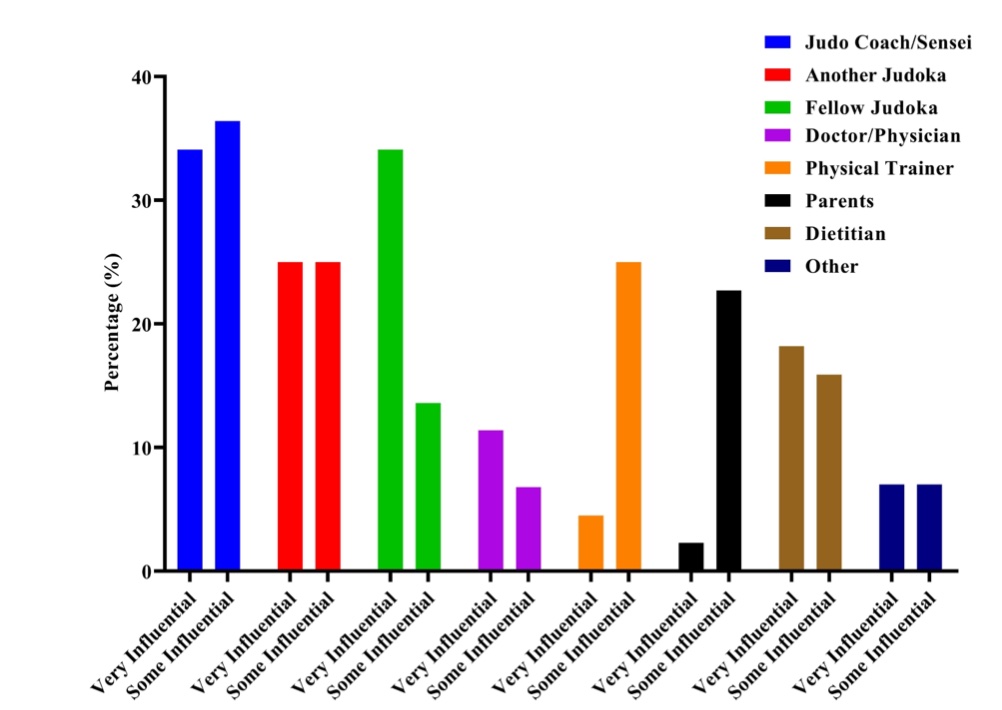
Weight loss (WL) is common among judokas; however, most studies concentrate on non-elite competitors. This study examined the extent, methodologies, and contributing variables of WL among Olympic-level judo competitors during the qualifying cycle, positing that elevated WL scores signify detrimental practices. Research data was collected using the cross-sectional survey method. Research data was collected from 44 judokas (32 males, 12 females) rated in the top 50 globally during 2024 Antalya Grand Slam. Independent samples t-tests and Mann-Whitney U tests were used to assess between-group differences, while Spearman’s rank-order correlation coefficients were calculated to assess the relationship between variables. Male athletes had markedly elevated typical weight loss percentages, peak career weight reduction (in kg and %), and post-competition weight return compared to females. Gradual dieting (87.9%), meal skipping (77.3%), increased exercise (72.7%), and sauna usage (70.5%) were the most common WL methods. The main sources of influence were coach/sensei (70.5%), fellow judokas (50%), and peers in the judo community (47.7%). Health professionals had little effect on WL behaviors. The age of judo practice onset was correlated with higher weight loss percentages and weight regain. Olympic-level judokas participate in substantial WL, mostly shaped by their coaching and peer dynamics. The results indicate that coaches and players need to have focused information to encourage safer ways to control their weight.
Download the full article HERE.
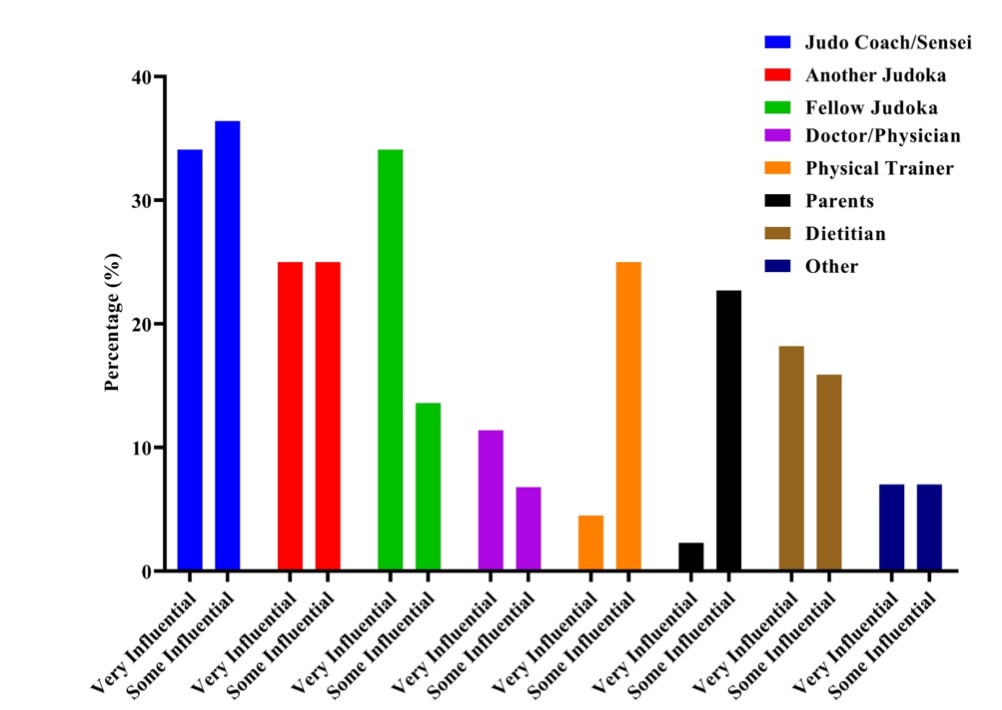
Frequency distribution for the source of influence
Check out our previous articles about judo and rapid weight loss.