Organize your Randori training and reach your full potential
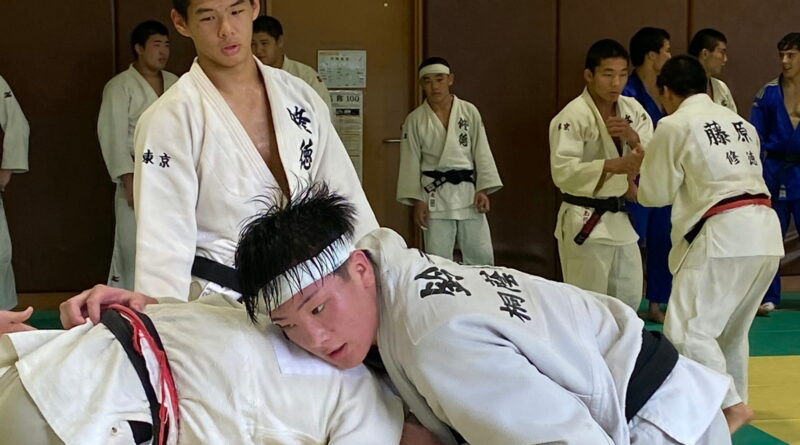
“Randori” is the training modality most closely related to actual judo matches but many times when can appreciate that many judoka’s are spending hours practising randori but dont improve a lot.
Among the many training forms used to develop physical fitness and match abilities in judokas, randori (free sparring) has been particularly emphasised by coaches due to its high specificity and ecological validity, as it closely mimics the unpredictable nature of real matches (Franchini & Takito, 2014; Franchini, Brito, et al., 2014).
There are many different variations that we can use in our training sessions but in my opinion coaches usually abuse of classic randori forgetting other options that can help to develop our judokas’s level like randori in groups, randori with referee, kakari geiko, moto dachi, etc.
When it comes to programming, every coach has their own way of preparing their plans. In this post I would like to share my own approach about how to organize the different types of randori during the different phases on judo periodization.
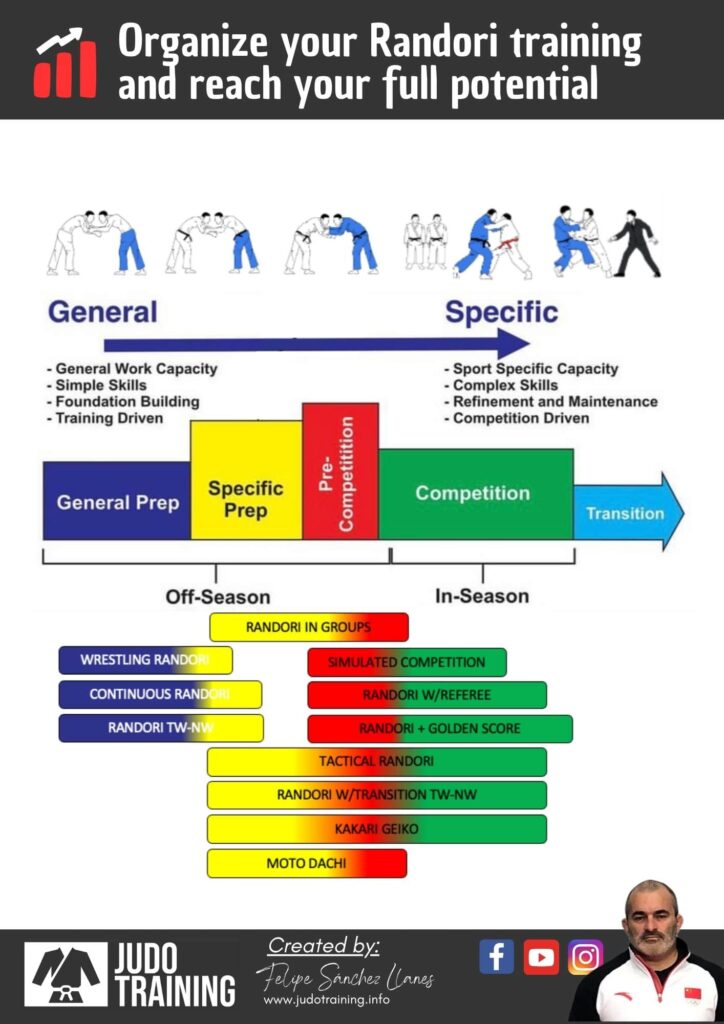
There’s no one-size-fits-all approach when it comes to judo periodization. Each method has its merits, and as coaches, our role is to select and blend strategies based on the needs, training age, level or goals of our judo athletes.
Coaches must be flexible and adapt to the changing demands of the competition season. This may require frequent adjustments to the training variables to meet the evolving needs of the athletes.
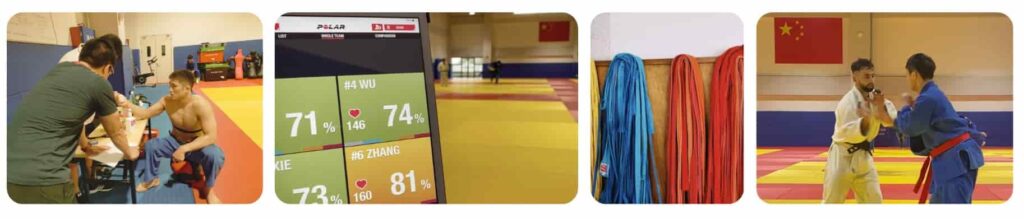
In the figures below we can see the heart rate monitoring from three different randori sessions done by a high level judo athlete. Monitoring training load during the randori sesions can help coaches to understand the differences between the different types of randori sessions.
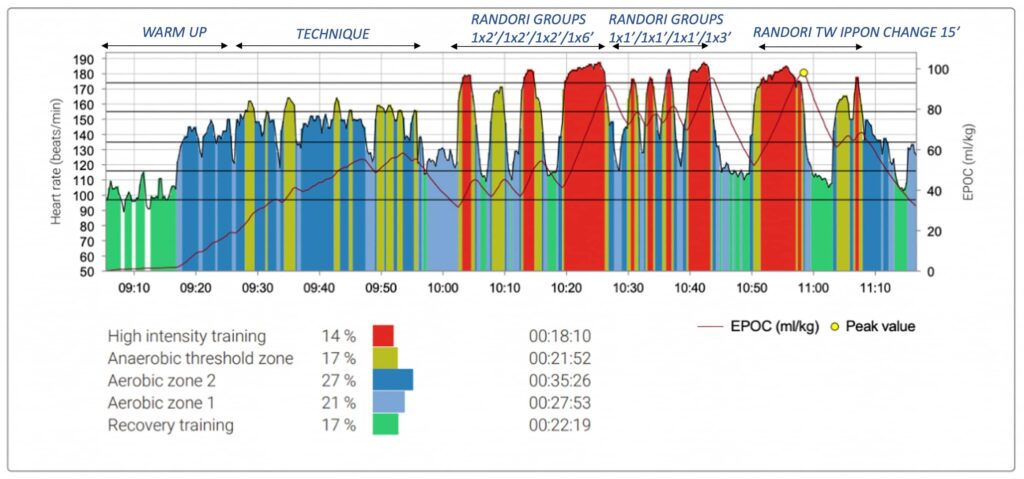
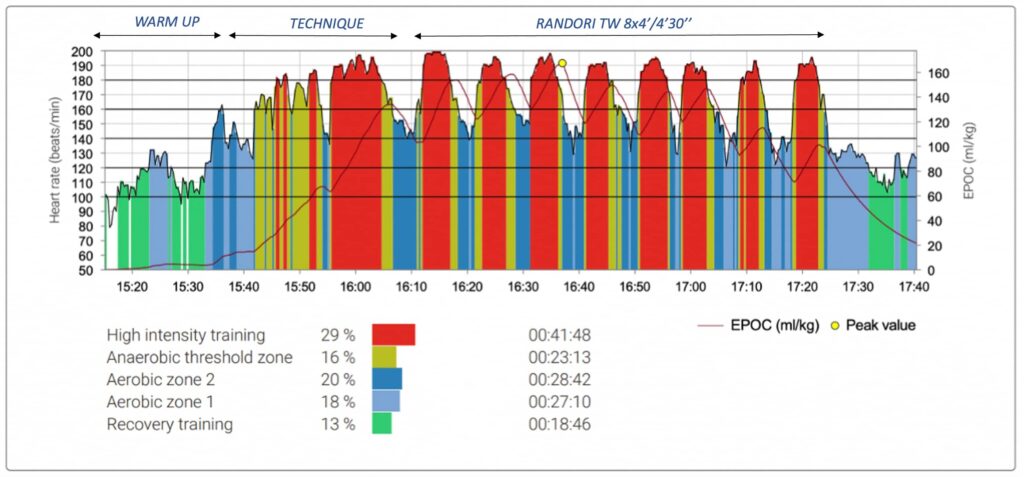
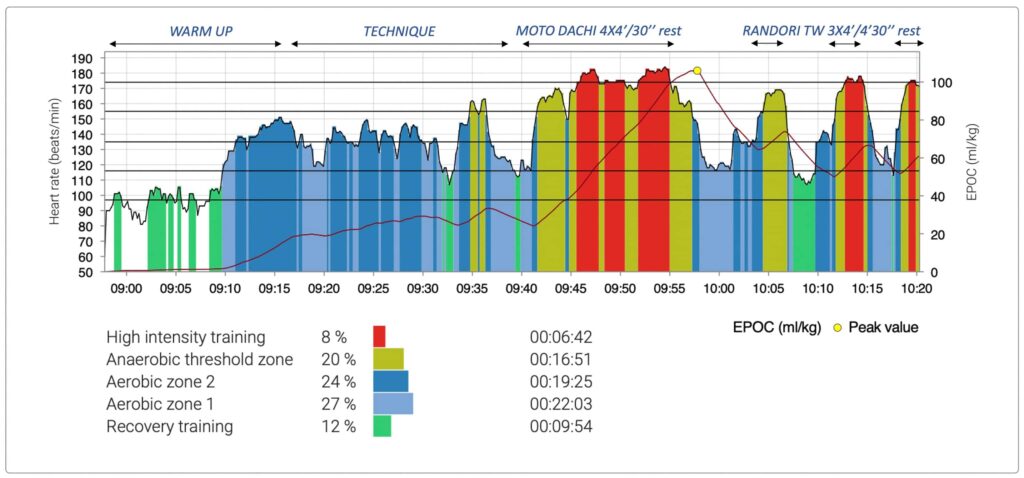
In addition to the different types of randori, you can design your randori sessions playing with other variables like duration or area size of combat. Temporal manipulation of randori represents a highly reliable strategy for controlling internal training load in elite judo, supporting its use as a central planning variable in high-performance training programs (Campos et al. 2026). Houcine et al. (2024) concluded that different training variables (i.e., area size of combat and type of combat) can be manipulated to differentially stress the energetic systems among male judo athletes.
CONCLUSIONS
- There are many different approaches you could take to improve different aspects of your game.
- Each time you do randori, you should be clear about the kind of randori you are about to do.
- There are many variations of the purposeful randori that you could adopt, it’s up to you to decide what it is you want to use the randori for. But always have a purpose. That will make your randori very productive.
- As a coach, you must take your athletes out of their confort zone as a way to improve their performance.
REFERENCES:
Bruno Teobaldo Campos, João Gabriel Rodrigues, Cesar Cavinato Cal Abad, Eduardo Macedo Penna & Luciano Sales Prado (31 Jan 2026): Physiological and training load responses to randori approaches in elite judo athletes, International Journal of Performance Analysis in Sport.
Đerek A, Karninčić H, Franchini E, Krstulović S, Kuvačić G. Different Training Methods Cause Similar Muscle Damage in Youth Judo Athletes. J Hum Kinet. 2021 Mar 31;78:79-87.
Franchini, E., Brito, C. J., & Fukuda, D. H. (2014). The physiology of judo-specific training modalities. Journal of Strength and Conditioning Research (JSCR) 28 5 , 1474–1481.
Franchini, E., & Takito, M. Y. (2014). Olympic preparation in Brazilian judo athletes: Description and perceived relevance of training practices. Journal of Strength and Conditioning Research, 28 (6), 1606–1612.
Houcine N, Ouergui I, Bouassida A, Franchini E, Bouhlel E. The effects of training type and area size variations on the physiological and session rating of perceived exertion responses during male judo matches. Biol Sport. 2024 Jan;41(1):53-59.