
Physiological and training load responses to randori approaches in elite judo athletes

Teobaldo Campos, B., Gabriel Rodrigues, J., Cavinato Cal Abad, C., Macedo Penna, E., & Sales Prado, L. (2026). Physiological and training load responses to randori approaches in elite judo athletes. International Journal of Performance Analysis in Sport, 1–18.
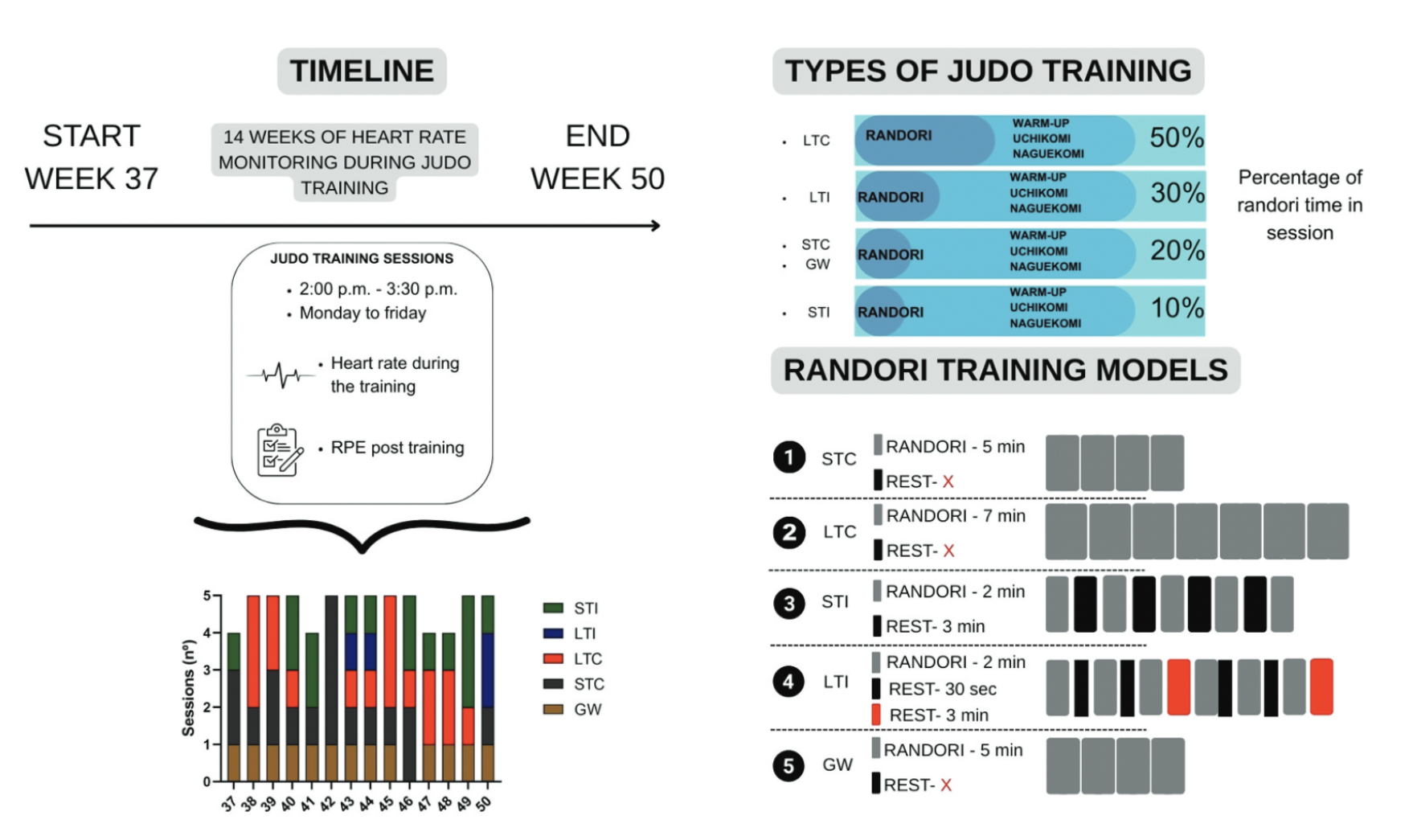
This longitudinal study analysed physiological and internal load responses to five randori formats in elite judo athletes: Short-Term Continuous (STC), Long-Term Continuous (LTC), Long-Term Intermittent (LTI), Short-Term Intermittent (STI), and Groundwork (GW). Sixteen high-level athletes completed 67 monitored sessions. Heart rate (HR) was continuously recorded, and internal load was assessed using session-RPE and training impulse (TRIMP). Data were examined using Linear mixed-effects models and Pearson’s correlation. LTC elicited the highest mean HR compared with STC, STI, and GW, while LTI also produced higher HR than these formats. TRIMP was greater during LTC relative to STC, STI, and GW, with LTI and STI also exceeding STC and GW. Athletes spent more time in the 80–90% HRmax zone during LTC and LTI compared with STC and GW. Internal load showed positive correlations with time in the 80–90% HRmax zone in LTC (r = 0.62), LTI (r = 0.66), and STI (r = 0.52). Randori structure influenced cardiovascular and internal load responses, with time in the 80–90% HRmax zone emerging as a key contributor to training stress. These results highlight the importance of selecting randori formats based on specific conditioning goals.
KEYWORDS: internal load; heart rate; combat sports.
Download the full article HERE.